Introduction to IIoT and Industry 4.0
Data has increasingly become a valuable asset, propelling industries through a digital transformation aimed at optimizing operational efficiency and connectivity. Central to this movement is the Industrial Internet of Things (IIoT), an essential element of Industry 4.0 that brings a powerful technological advancement to industrial practices. This article explores the realm of IIoT, examining its fundamental concepts, differentiating it from the general Internet of Things (IoT), and showcasing its practical applications that are innovating various industries.
What Is the Industrial Internet of Things (IIoT)?
The industrial internet of things (IIoT) is the network of sensors, PLCs, machines, gateways and software that collects data from industrial processes and uses it to monitor, control and optimize them. It is the industrial part of the broader internet of things. This article focuses on how IIoT works and, above all, on how to keep IIoT secure. For a closer look at the hardware side (edge devices, IIoT gateways and IO-Link), see our guide to IIoT key technologies driving Industry 4.0.
Understanding the Basics: IIoT vs. IoT
The Industrial Internet of Things (IIoT) signifies the extension of IoT into industrial environments. It focuses on seamless machine-to-machine communication, big data analytics, and machine learning, empowering businesses to boost their operational effectiveness. IIoT spans across industries and includes robotics, medical equipment, and sophisticated production processes.
IIoT uniquely combines information technology (IT) and operational technology (OT). OT includes systems managing operational processes, such as supervisory control, SCADA, and DCS systems. By merging these technologies, IIoT fundamentally transforms industrial operations, supporting data-driven decision-making.
IIoT vs. IoT: Key Differences and Overlaps
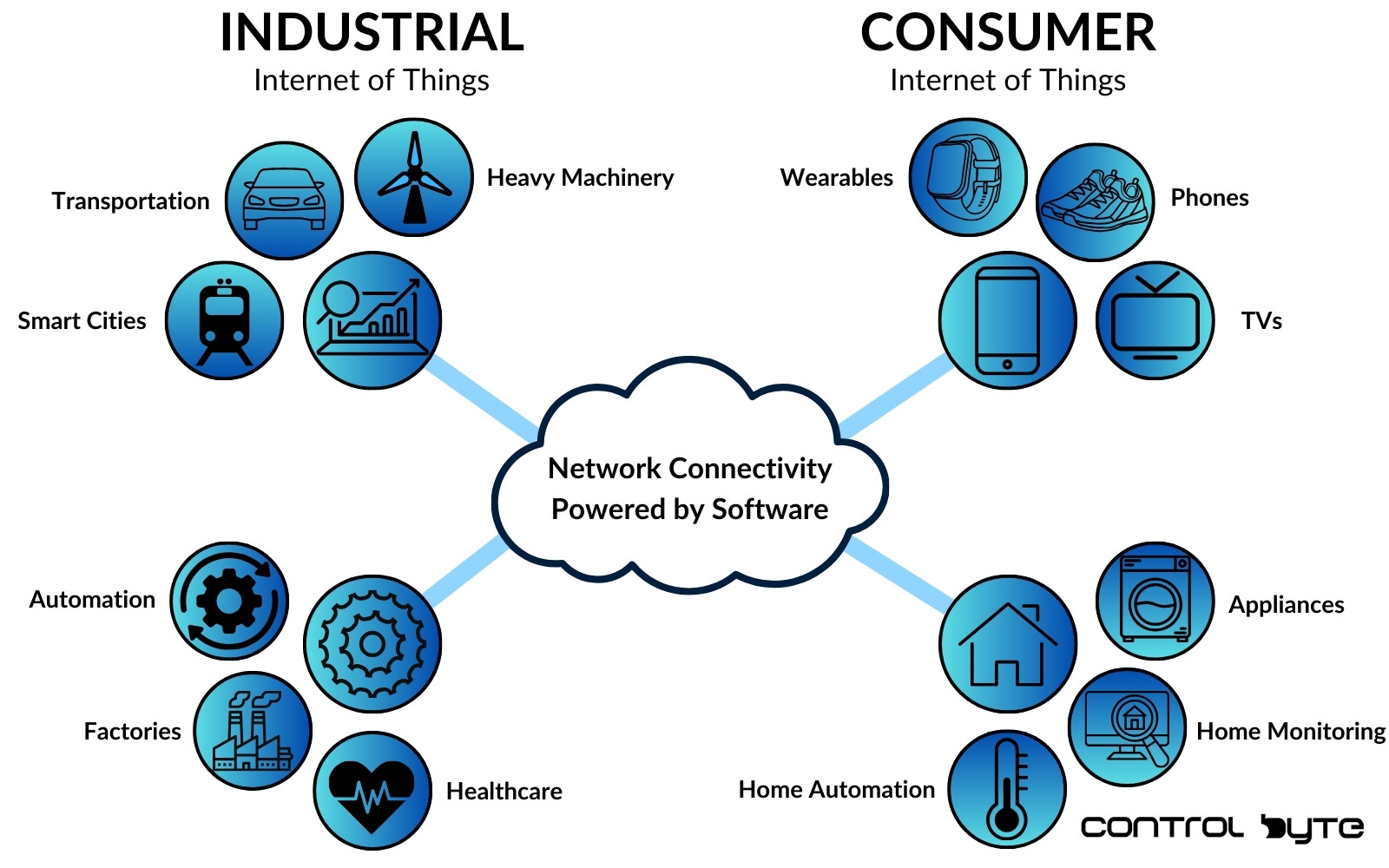
IoT comprises a vast network of physical devices known as “things,” equipped with sensors, software, and connectivity to interact with other devices and systems. From household gadgets to smart city applications, IoT is part of daily life, with over 15 billion IoT devices in use worldwide.
IIoT vs. IoT: Key Differences
The primary distinction between IoT and IIoT is their purpose. While IoT is often focused on consumer applications for convenience, IIoT aims at enhancing safety and efficiency in industrial settings.
| Aspect | IIoT (Industrial IoT) | IoT |
|---|---|---|
| Scale | Large-scale networks | Smaller-scale networks |
| Connectivity | Both wired and wireless | Primarily wireless |
| Data Quantity | High to very high | Medium to high |
| Interoperability | Integrates with diverse technologies | Primarily independent |
| Sensor Utilization | Advanced sensors (e.g., torque, RFID) | Basic sensors (e.g., motion, temp) |
| Cybersecurity | Advanced protocols | Moderate protocols |
| Objective | Automation, safety, efficiency | User convenience |
Similarities Between IIoT and IoT
Both IIoT and IoT share foundational principles: device connectivity, cloud computing, machine learning, and AI for smart decision-making. They leverage common devices like sensors and cameras, prioritize energy efficiency, emphasize security, and support scalable system expansion.
How Does IIoT Work? Understanding Core Components
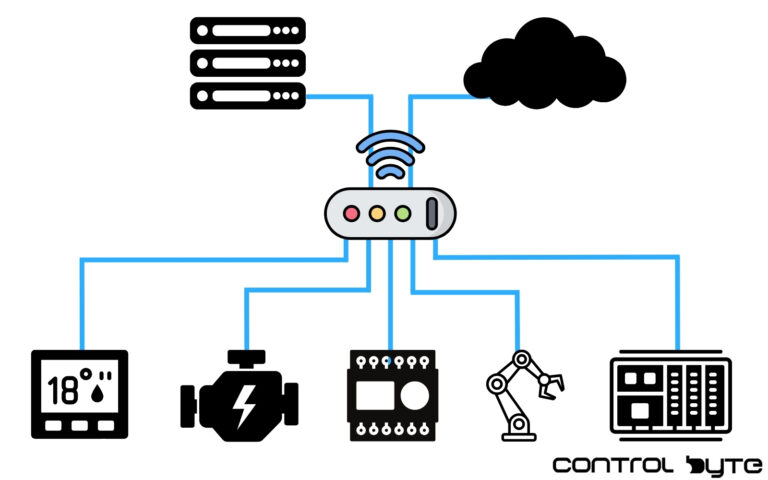
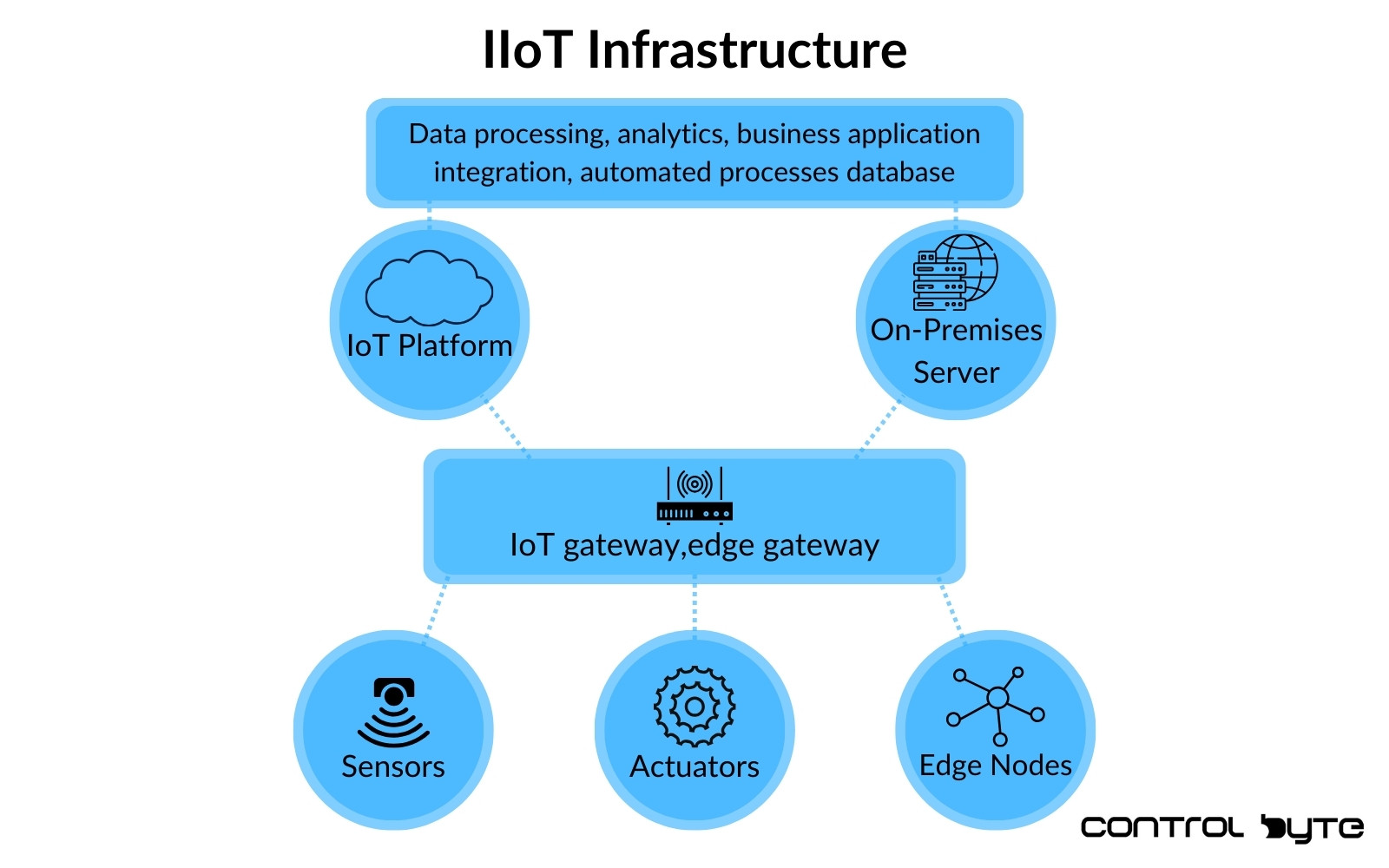
IIoT connects smart devices into systems for data gathering, communication, and analysis:
- Connected Devices: These devices capture and share information.
- Data Communication: Networks transmit data from devices.
- Analytics and Applications: Data processing offers actionable insights.
- Data Storage: Data is stored for future analysis.
- Human Interaction: Information aids in decision-making.
These interconnected devices help maintain machinery, manage processes, and inform predictive maintenance strategies, optimizing business operations.
Exploring IIoT Architecture: Edge, Network, and Cloud Layers
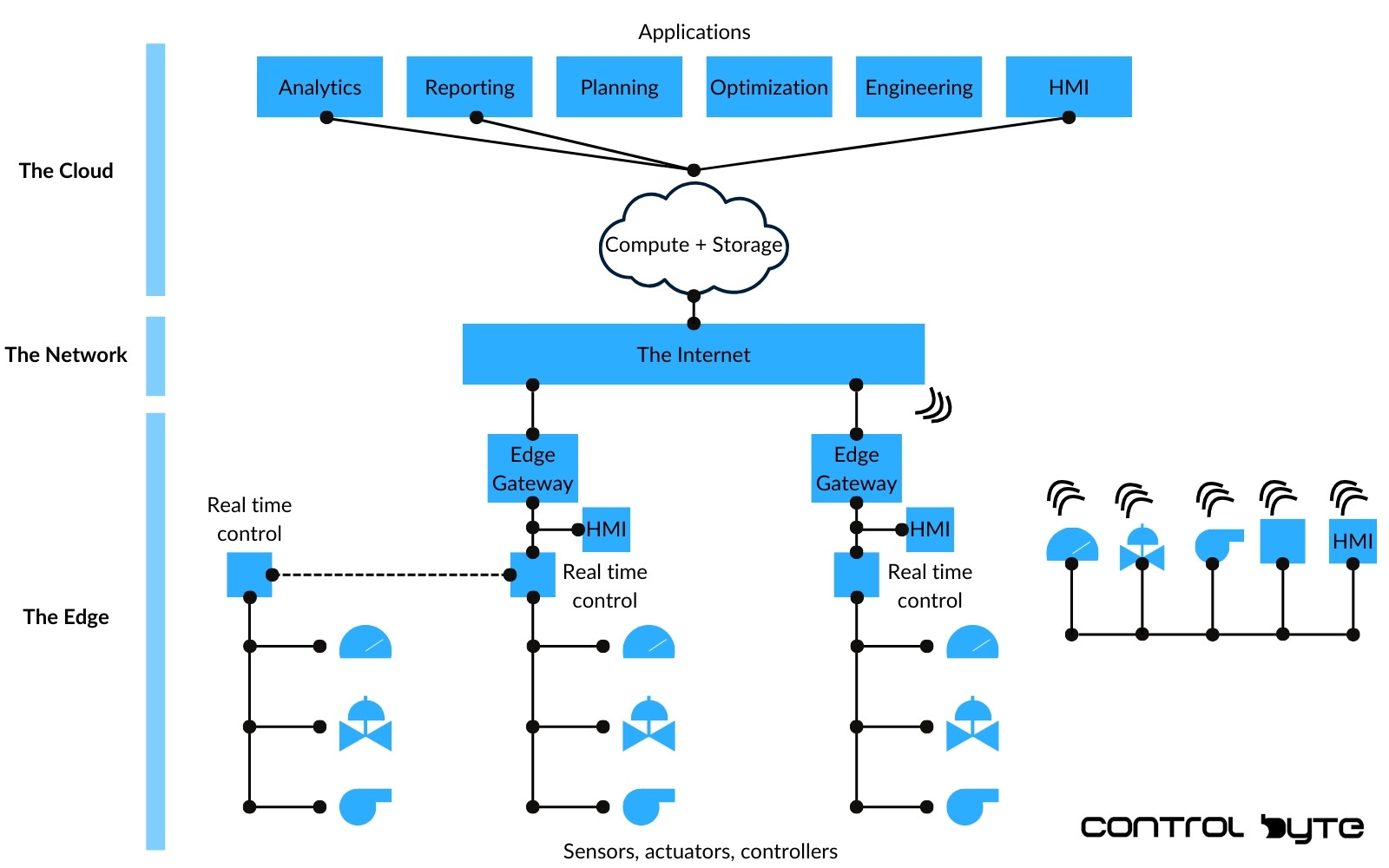
IIoT architecture typically includes:
- Edge Layer: Sensors and controllers gather and initially process data.
- Network Layer: This layer transfers data to cloud systems.
- Cloud Layer: Comprehensive data analysis, incorporating advanced analytics and AI.
This architecture enables immediate data responses at the edge while facilitating deeper analysis in the cloud.
Benefits of IIoT: How It Drives Efficiency and Productivity
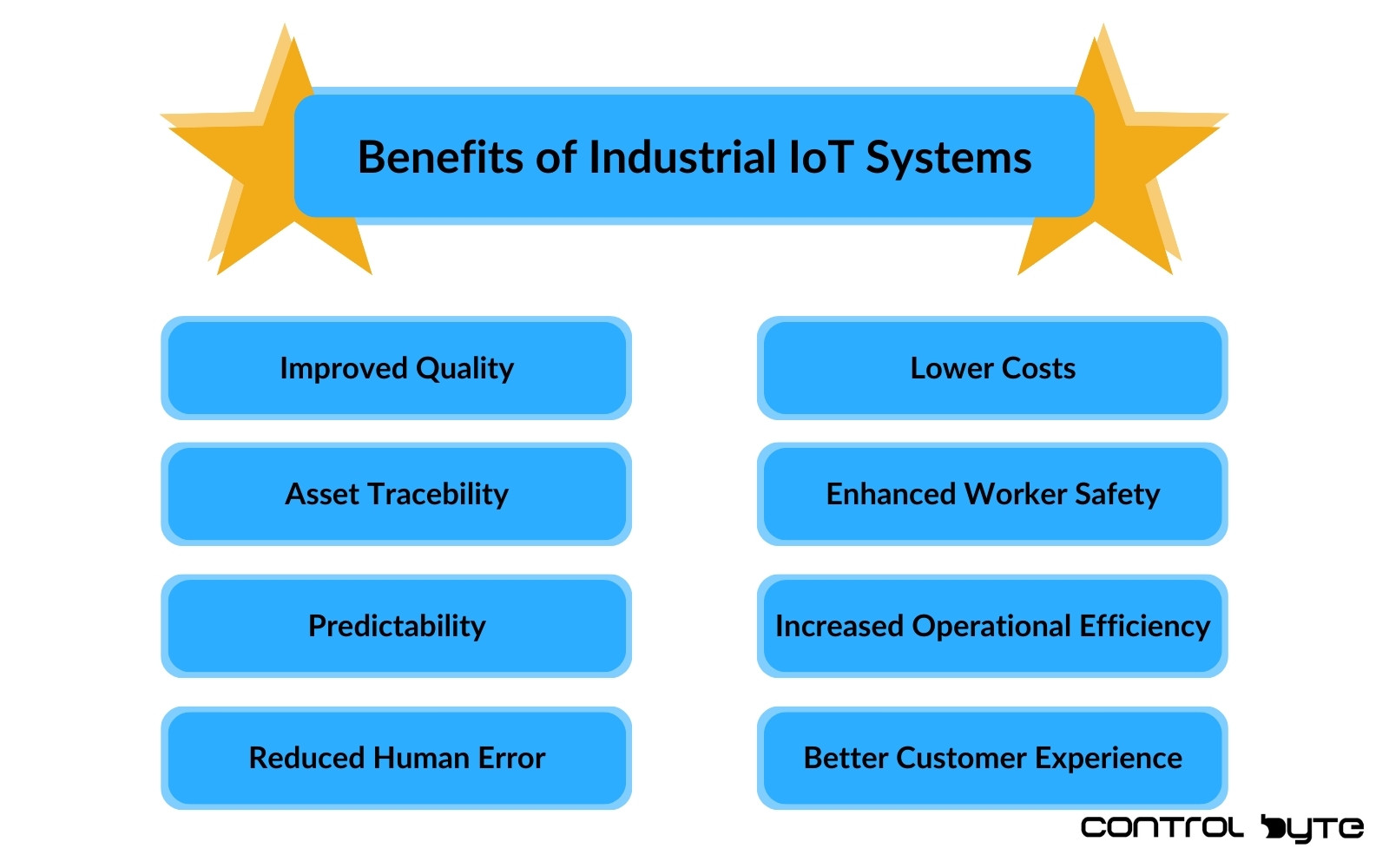
IIoT delivers multiple business benefits, including:
- Efficiency Gains: Real-time monitoring allows automation and better decision-making.
- Increased Production: Streamlined equipment performance boosts capacity.
- Reduced Errors: Automation reduces product defects, improving quality.
- Predictive Maintenance: Sensors enable preemptive maintenance, minimizing downtime.
- Enhanced Safety: Sensors monitor workplace safety.
- Energy Savings: Monitoring and optimizing energy consumption lowers costs.
- Improved Customer Service: Real-time data enhances customer support.
Industrial IoT Security: Ensuring Safety and Reliability
IIoT security is vital given its extensive interconnectivity and data generation. To mitigate risks, companies use data encryption, access controls, device authentication, and network segmentation. Monitoring IIoT networks and adhering to industry standards helps secure sensitive data.
Why IIoT Security Is Different from IT Security
In an office network, a security incident usually means lost or stolen data. In an industrial IoT system, it can mean a stopped production line, damaged equipment or a safety risk for people. The nature of IIoT also changes the priorities: availability and integrity of the process come first, and many devices run for 15-20 years without updates. Industrial protocols such as Modbus TCP or classic PROFINET were designed for closed networks and have no built-in authentication, so they must be protected by the network architecture around them.
Risks Associated with IIoT
The most common IIoT security concerns we see in real plants are:
- Flat networks - PLCs, HMIs, office PCs and IIoT gateways in one network, so a single infected laptop can reach every controller.
- Unsecured remote access - remote desktop tools or open ports used by service companies and never closed.
- Default passwords - HMI panels, routers and gateways installed with factory credentials.
- Unpatched systems - old Windows-based SCADA stations and firmware with known vulnerabilities.
- Unencrypted data - process data sent to the cloud without TLS, or MQTT brokers without authentication.
- Lack of asset inventory - many IIoT deployments grow device by device, and nobody knows exactly what is connected.
- Human factor - phishing, USB sticks and shared accounts remain one of the main entry points.
How to Make IIoT Secure: Security Measures That Work
The most widely used framework for industrial IoT security is the IEC 62443 series of standards. It introduces the idea of zones and conduits: devices with similar security requirements are grouped into zones, and all traffic between zones goes through controlled conduits (firewalls, DMZ, VPN). In practice, the following security measures give the biggest effect:
- Network segmentation - separate the OT network from the IT network and place IIoT gateways and data servers in an industrial DMZ.
- Least privilege - every user, service and device gets only the access it needs; no shared administrator accounts.
- Secure protocols - use OPC UA with the Sign or SignAndEncrypt security mode, MQTT over TLS with client authentication, and HTTPS instead of HTTP.
- Hardening of controllers - use the access protection levels of the PLC, disable unused services and communication functions you do not need, and protect the project with a password.
- Secure remote access - a VPN with multi-factor authentication and access granted only for the time of the service work.
- Patch and asset management - keep an up-to-date list of devices, firmware versions and known vulnerabilities.
- Monitoring - log access to controllers and use OT network monitoring to detect unusual traffic.
- Backups - store current PLC and HMI projects offline, so the plant can be restored after an incident.
IIoT Security Awareness for Automation Engineers
Many IIoT security problems are created during commissioning: an open port left for remote support, a test account that was never removed, a gateway connected to two networks at once. Security awareness of the people who program PLCs and configure networks is therefore just as important as firewalls. Automation engineers should understand basic network concepts (IP addressing, VLANs, routing, firewalls) and how industrial protocols behave. Our Modbus, PROFINET and OPC UA communication course explains how these protocols work and what you need to know to connect PLCs to IIoT systems safely.
Addressing the Challenges of IIoT Implementation
Challenges in IIoT include:
- System Integration: Integrating IIoT with existing systems requires sophisticated solutions.
- Data Management: Handling large data volumes calls for efficient storage and analysis tools.
- Skills Gap: Demand for IIoT experts exceeds supply.
- Interoperability: Compatibility between diverse devices is challenging.
- Scalability: Expanding IIoT networks requires robust infrastructure.
- Bandwidth: Sufficient bandwidth is needed for seamless device communication.
IIoT Applications: How Industrial IoT Transforms Industries
IIoT adoption is broadening, with applications across various sectors:
- Logistics: Drone technology aids rapid deliveries.
- Manufacturing: Real-time insights improve production.
- Agriculture: Automated tractors enhance efficiency.
- Automotive: Sensors optimize autonomous vehicle navigation.
- Construction: Equipment tracking improves safety and compliance.
- Power: IIoT simplifies power grid management.
- Cybersecurity: IIoT enhances endpoint monitoring.
Key Applications and Use Cases of IIoT Across Industries
- Fanuc: IIoT sensors for predictive maintenance.
- Airbus: Smart factories with safety-focused IIoT tools.
- Maersk: Route optimization for shipping.
- John Deere: Self-driving agricultural equipment.
Key IIoT Vendors and Solutions in the Marketplace
Notable IIoT vendors include ABB, Cisco, GE, Siemens, and Microsoft Azure, each offering innovative solutions that help industries harness the power of IIoT for optimized performance.
Examples of such devices:
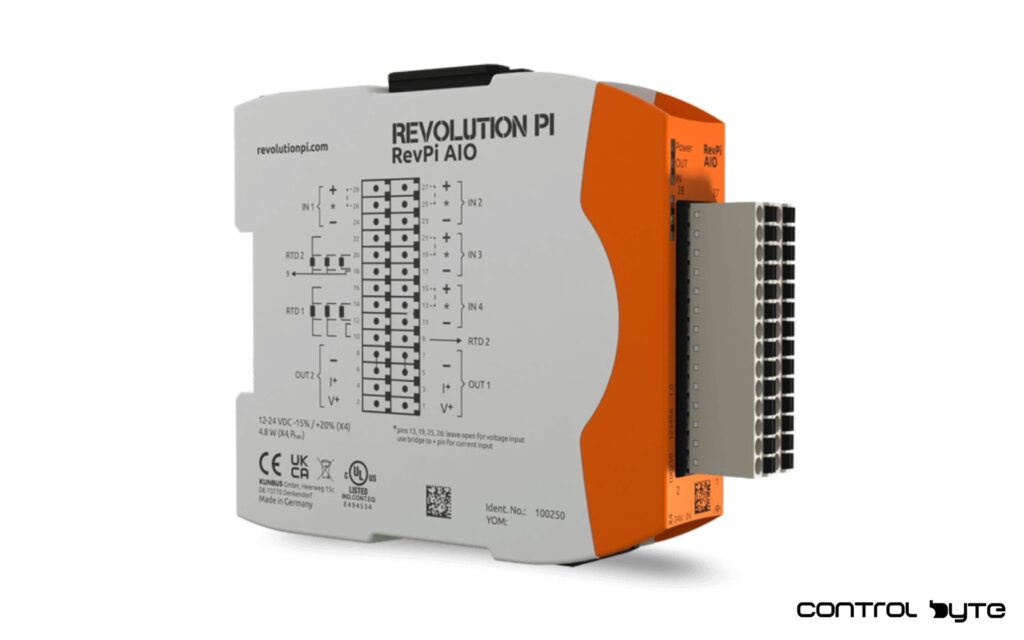
RevPi Aio
Description: The RevPi Aio, an innovative IIoT device, is engineered for applications that demand robust connectivity, data acquisition, and practical efficiency within industrial environments. Designed for flexibility and modular expansion, this device supports diverse industrial applications by integrating various sensors, controllers, and cloud connectivity options. As part of the broader Industrial Internet of Things (IIoT) ecosystem, RevPi Aio offers powerful solutions for automating industrial processes, driving digital transformation, and improving real-time data handling. This IIoT solution supports modern cloud computing and edge devices, enabling advanced data analysis and machine learning models to run closer to the data source, which is essential for efficient industrial operations.
Example Application: In an industrial manufacturing environment, RevPi Aio can be deployed as part of an IIoT network to optimize practical processes. Connected to the internet, it enables predictive maintenance by monitoring equipment conditions and identifying patterns of wear. Through its IIoT architecture, RevPi Aio can streamline practical processes by identifying equipment malfunctions in real-time and automatically triggering alerts or maintenance actions. This solution is particularly valuable for industries aiming to reduce downtime and increase the lifespan of their equipment, benefiting from the digital industrial applications central to Industry 4.0.
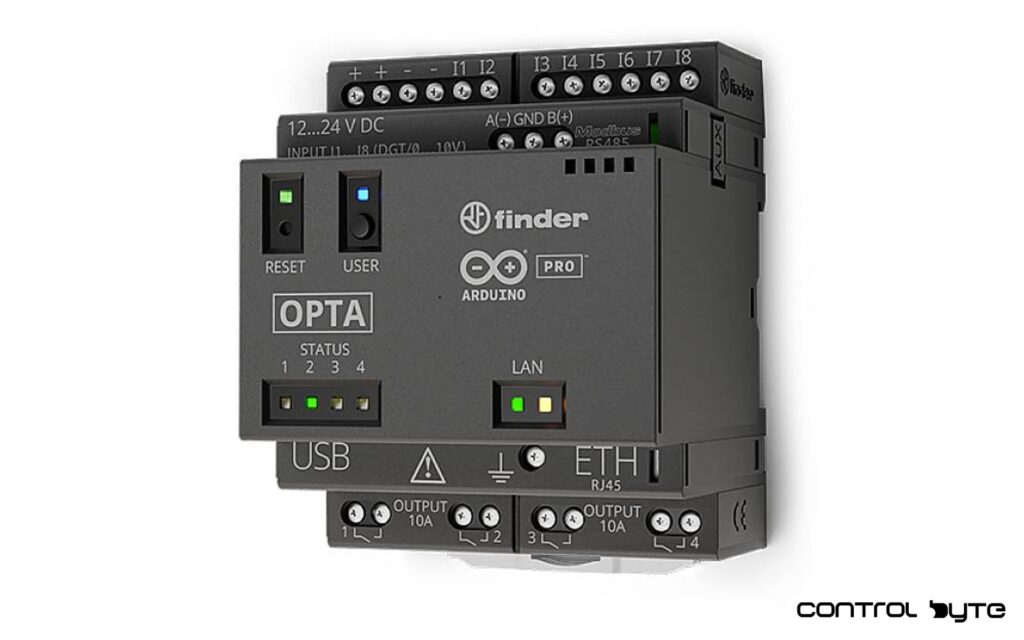
Finder Opta
Description: Finder Opta is a compact, programmable logic controller (PLC) specifically designed to enhance industrial IoT (IIoT) applications. It is widely used in industry for its ability to support small- to medium-scale automation tasks, enabling companies to automate operational processes effectively. Its compatibility with IIoT technologies allows it to seamlessly integrate within an IoT ecosystem, making it ideal for managing industrial infrastructures that require remote monitoring, real-time data analysis, and process optimization. Finder Opta is connected to smart devices and sensors that provide industrial data, enhancing the system’s ability to optimize resources and streamline production, essential for digital transformation.
Example Application: In building automation within an industrial setting, Finder Opta serves as a critical device for optimizing energy usage. By connecting with sensors and smart devices, it automates HVAC and lighting systems, responding dynamically to factors like occupancy and external temperature. Through cloud computing integration, Finder Opta provides insights on energy consumption and operational efficiency, enabling buildings to cut costs while reducing their environmental impact. This IIoT deployment supports Industry 4.0 goals, where energy-efficient, connected environments represent a key element of the fourth industrial revolution.
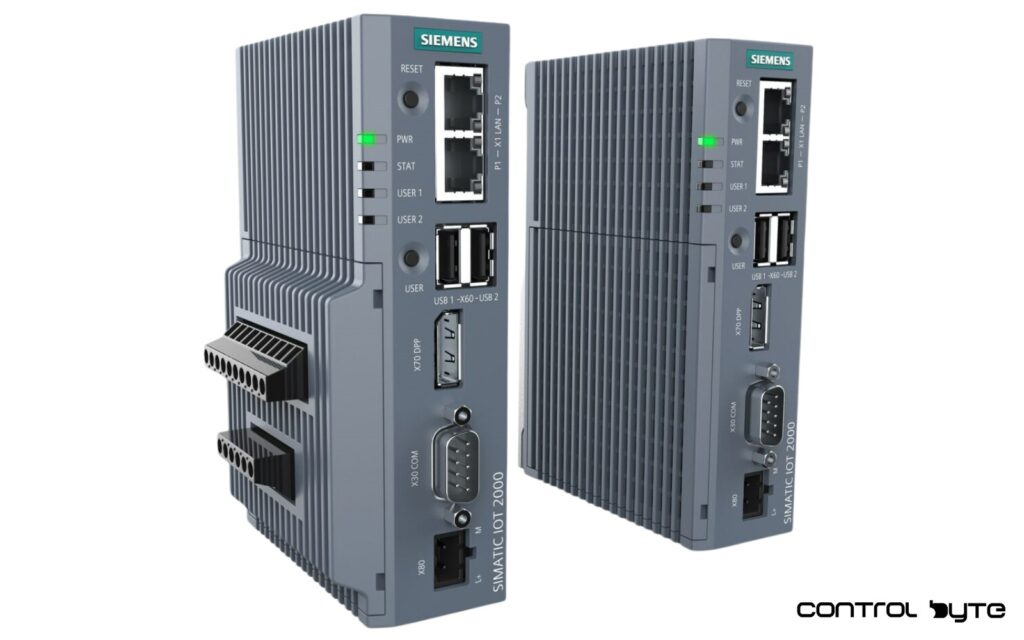
SIMATIC IOT2000
Description: The SIMATIC IOT2000 by Siemens is a versatile IIoT gateway that facilitates seamless data communication and interoperability between legacy industrial equipment and modern IIoT systems. Engineered for complex industrial environments, SIMATIC IOT2000 supports IIoT adoption by connecting devices to the internet, providing secure data transfer, and enabling data-driven decision-making. It serves as a bridge within IIoT architecture, transferring data from edge devices to cloud infrastructure, thereby streamlining industrial processes and enhancing the IIoT ecosystem. With its secure design and compliance with industrial IoT security standards, SIMATIC IOT2000 is a reliable IIoT device that addresses security risks, making it integral for modern industrial operations and IIoT implementations.
Example Application: In the logistics and supply chain industry, SIMATIC IOT2000 is used to track shipments, monitor inventory, and optimize distribution networks. By connecting to sensors on transportation vehicles and storage units, it collects data on conditions such as temperature and humidity, which are crucial for transporting perishable goods. The device then securely transmits this data to a centralized system for analysis, enabling companies to automate processes, reduce spoilage, and enhance supply chain efficiency. As a key IIoT solution, SIMATIC IOT2000 drives digital transformation across supply chains, embodying Industry 4.0’s focus on optimized connectivity and operational efficiency.
The Future of IIoT and Digital Innovation
Looking ahead, IIoT promises advancements in:
- Automation: Enhanced automation to reduce manual tasks.
- 5G and Connectivity: Faster data exchange with minimal latency.
- Edge Computing: Real-time data processing near the source.
- AI Integration: Improved data analysis and predictive maintenance.
- Interoperability: Standardization efforts for seamless integration.
- Sustainability: IIoT for efficient resource management.
Industrial Internet of Things (IIoT) - FAQ
What are the three components of an IIoT system?
Most definitions name three components: connected devices (sensors, actuators, PLCs), the communication network that transports the data, and the analytics layer where data is stored and processed at the edge or in the cloud.
What are examples of the industrial internet of things?
Predictive maintenance of motors based on vibration sensors, remote monitoring of pump stations and wind turbines, OEE dashboards fed from PLC data, energy monitoring with smart meters, and tracking of goods in logistics.
What is the biggest IIoT security risk?
In most plants it is the lack of network segmentation combined with insecure remote access. When the OT network is flat and reachable from the internet or the office network, one compromised device can affect every machine.
Which standard covers industrial IoT security?
IEC 62443 is the main international series of standards for the security of industrial automation and control systems, covering both asset owners and suppliers of components.
Leveraging IIoT for a More Efficient and Secure Industrial Landscape
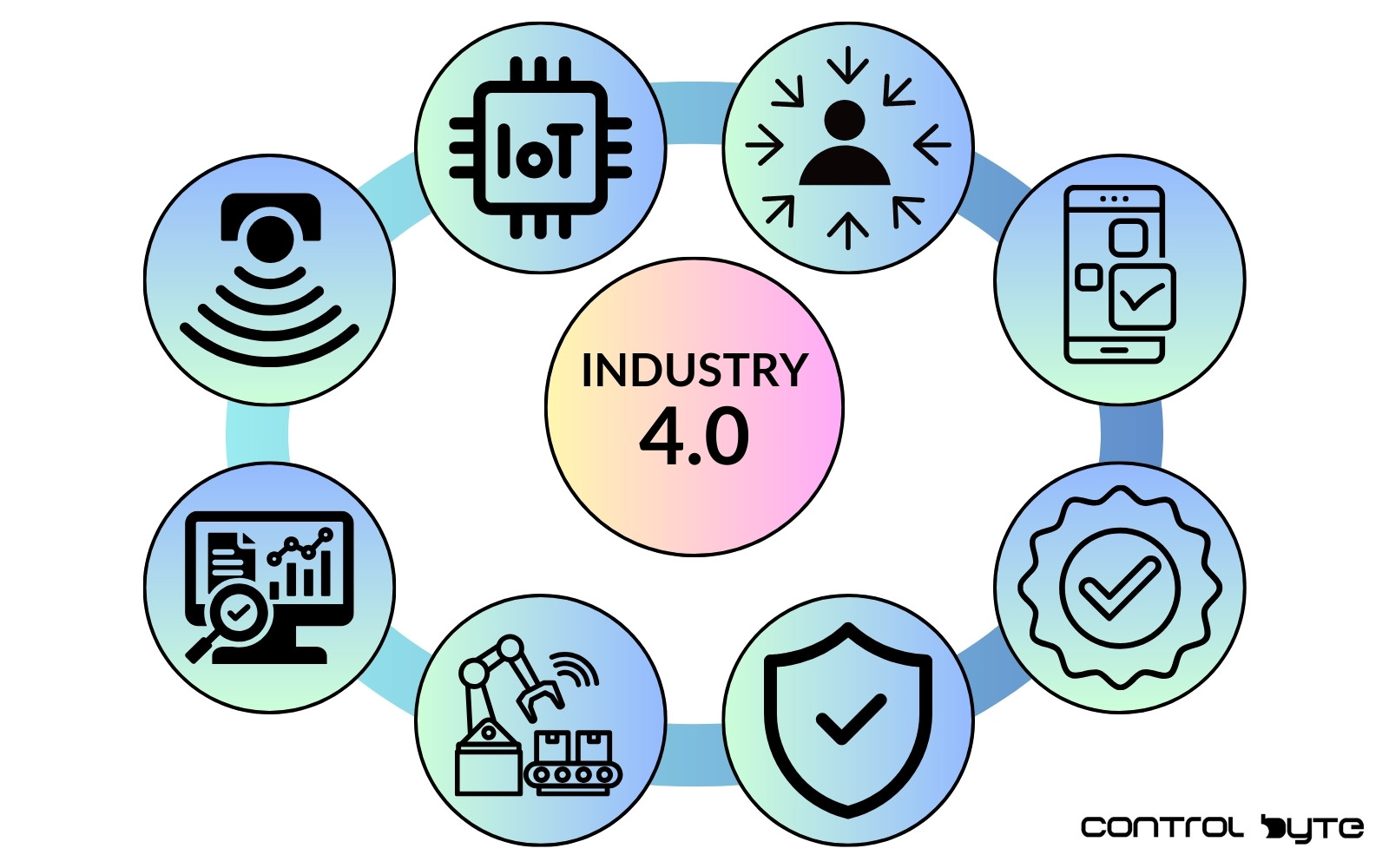
The Industrial Internet of Things stands as a transformative force within Industry 4.0, revolutionizing the way industries operate. By integrating IT with OT, IIoT emphasizes safety, efficiency, and sustainability in industrial environments, paving the way for smarter, connected systems. Despite implementation challenges, advancements in IIoT promise improved processes, reduced costs, and significant industrial innovation, foreshadowing a more connected and efficient future.
Thank you for reading! If you're interested in learning more, explore our courses for in-depth training: Modbus, PROFINET and OPC UA communication training.